Destinations

Experience the harmony of nature and climate, merged seamlessly with the richness of heritage and cultural authenticity

Recommend a destination

Tathleeth

Nestled harmoniously between the desert and rocky highlands, Tathleeth province stretches across the fertile expanses of Wadi Tathleeth and its tributaries, creating diverse climatic zones, each influencing lifestyle and livelihoods distinctively. From a nomadic system relying on herding numerous camels with their dark hues and rare breeds, to an urban agriculture-based system flourishing in its western plains, especially in palm cultivation which yields abundant dates and related industries.

Tathleeth holds an ancient historical significance, positioned along the caravan routes of old, thus it is rich with various archaeological sites, inscriptions, and remains of ancient buildings.

In the center of Jash—mentioned in numerous historical texts and ancient manuscripts—we find remnants of old stone buildings and inscriptions in the extinct Himyaritic language carved on Mount Al-Qannah, alongside mining traces and firmly fixed stone formations resembling remnants of dams and graves near Mount Al-Razah. Also present is the Jash Fort, constructed from two stone slabs and completed with mud, rising four stories high.

Tathleeth’s vast nature, spanning desert and plateaus, makes it a magnet for adventure seekers and rock enthusiasts, like the smooth "Umm Haid" rock surrounded by a flowing stream, or for safari lovers and those eager to camp under its clear skies.

Tarib

Tareeb is located along the routes connecting the Aseer region to the heart of the Kingdom, nestled beside the branching Wadi Tareeb, which cuts through the desert sands, leading to vibrant urban sites rich with ancient relics that trace the area's long history of settlement.

Those in search of cultural tourism will find in Tareeb a collection of ancient mud fortresses and castles, offering insights into the architectural methods of old—techniques that span plains, plateaus, and deserts, showcasing the enduring ingenuity of early builders who skillfully utilized their natural surroundings.

Tareeb’s natural landmarks make it a prime destination for visitors. In Wadi Al-Hayyah, age-old sidr trees line the banks, creating perfect spots for relaxation and camping. Meanwhile, Wadi Karwil scatters talh trees as grazing land for livestock, with some locals raising and trading animals and their products in various traditional markets.

Camping enthusiasts will find the desert fringes around Tareeb a serene haven for engaging conversations, contemplation, and mental clarity, making for an unforgettable journey.

Tanomah

Located on one of the highest peaks of the Sarawat mountain range, amidst the canals of water flowing from dams, valleys, and towering forests, lies the governorate of Tanomah, 125 kilometers from the city of Abha. The majestic Mount Mun'aa greets visitors with its smooth rocks carved by abundant waterfalls during the rainy seasons, typically in summer, bestowing upon it a moderate to cool climate, with chilly winters. Every direction in Tanomah promises a unique, unforgettable experience where stunning natural beauty and the thrill of adventure and discovery converge.

When in Tanomah, pause to marvel at the Dahna Waterfalls gushing impressively when the Dahna Village dam overflows, or indulge in the joy of trekking through forests under ancient juniper trees in a mountainous journey at natural parks like King Salman Park, Al Sharaf Park, or Al Mahfar Park. Rural tourism in Tanomah offers an unmissable opportunity, where you can spend a day among fertile fields abundant with grapes, pomegranates, figs, and apricots, surrounded by aromatic herbs like wormwood, sumac, mint, and basil.

Tanomah’s history is rich with tales recounted in Arab poetry about the famous Wadi Turj, extending to Bisha, known for its abundant water and wild beasts, where visiting and exploring are adventures for the brave. Or, you might stroll through the heritage village museum and safely touch the antiquity.

Tanomah; a place so enchanting, it's no wonder it captures the heart!

Dhahran Al Janoub

Positioned as Aseer's southeastern gateway, Dhahran Al-Janoub is cradled by majestic mountains, draped in dark hues and cascading waterfalls that follow the summer rains. These mountains overlook virgin valleys rich in biodiversity, providing an exhilarating experience for adventurers. The strategic "Alb" border crossing is situated here among high mountains, enhancing its importance. The region is lush with orchards producing succulent fruits and diverse crops, and its valleys, adorned with lavender and wild herbs, end in tranquil dams such as Wadi Al Farwan Dam, Wadi Al Shat, and Wadi Ara'ar, which serve as serene natural parks.

Dhahran Al-Janoub is steeped in history, once a caravan route known for the "winter journeys." It was part of the "Incense Route" with ancient inscriptions and drawings preserved on the rocks of the "Katam," "Al Mubrah," and "Azzan" mountains. It also played a role in the "Elephant Road," part of Abraha the Abyssinian's famous attempt to demolish the Kaaba, with some of the stone path he paved still visible in "Al Maslulah," "Qawiyah," and "Al Thawilah.”

For visitors, Dhahran Al-Janoub offers an insight into its urban heritage in its ancient mud-brick villages within the city, characterized by tall fortresses, remnants of stone wells, and mosques dating back to the companions' era.

Dhahran Al-Janoub enriches your senses with the grandeur of nature and history.

Sarat Abidah

Located south of Abha, Sarat Abidah is draped in clouds and bordered by the moon, set amidst towering mountains, deep valleys, and green plateaus. Like its neighboring towns, it enjoys a mild summer and cold winter climate with seasonal rains that boost its agricultural activities. As you explore the evolving paths of Sarat Abidah, you'll discover numerous artistic sculptures dotting its landscape.

Tourists are drawn to Sarat Abidah for its natural beauty, from the lofty mountains like Al Majaz and Jabal Thalm, which holds traces of Abu Zayd al-Hilali’s horse ties, to the stunning valleys like Wadi Al Jowf and Al Sarawi. Its natural parks, such as Al Ramidah with its fresh groundwater, and Al Jamma with dense trees, offer perfect settings for a day out in solitude amidst greenery.

Sarat Abidah is distinguished by a social fabric built on solidarity, cooperation, and harmony, visible alongside the civilizational and historical factors in one of Aseer's most famous heritage villages, "Al Khalaf Village." The village demonstrates masterful lessons in traditional architecture, utilizing local materials and tools, simple yet strong construction tailored to the community's needs and aspirations. The village tour offers a delightful stroll through its butcher shops and mud houses, leading to the famous cave with its marble columns, four rooms, and the manually dug "Barha" well, flowing with water and linked to the Banu Hilal. Visitors can also enjoy a cultural tour at the "Ibn Muatiq" museum, brimming with unforgettable local details and history.

Saeedah Al Sawalihah

Stretching in wonder and clarity, the beaches of Saeedah Al Sawalihah dazzle with golden sands and pure turquoise waters, marking the northern gateway of Aseer along the Red Sea. A fitting destination for beach and leisure tourism, it’s also a haven for bird watchers. The ecosystem attracts and supports the breeding of migrating African birds like the olive pigeon, the peregrine falcon, the Arabian woodpecker, the brown eagle, the Aseerian magpie, flamingos, and white gulls. Its pristine coasts, rich in biodiversity, draw various fish and crustaceans that make their homes among the coral reefs. Here, one might also spot whales and dolphins crossing the waves of Saeedah Al Sawalihah’s shores in peace and tranquility.

Saeedah Al Sawalihah boasts a unique environment where vital plant groups thrive, including mangroves, acacias, myrrh, and doum palms, blending the green with the clear blue sea in a serene encounter that invites relaxation and healing.

Rijal Almaa

Like a bouquet of natural hues, Rujal Alma lies secluded in a valley 45 km from the city of Abha, spreading its radiant colors across surrounding slopes, plains, and valleys as art, culture, heritage, and richness amid a unique ecosystem and biodiversity. The climate here is temperate, with cozy winters and warm summers, complemented by heavy monsoon rains and sweeping torrents from the encircling Sarawat Mountains.

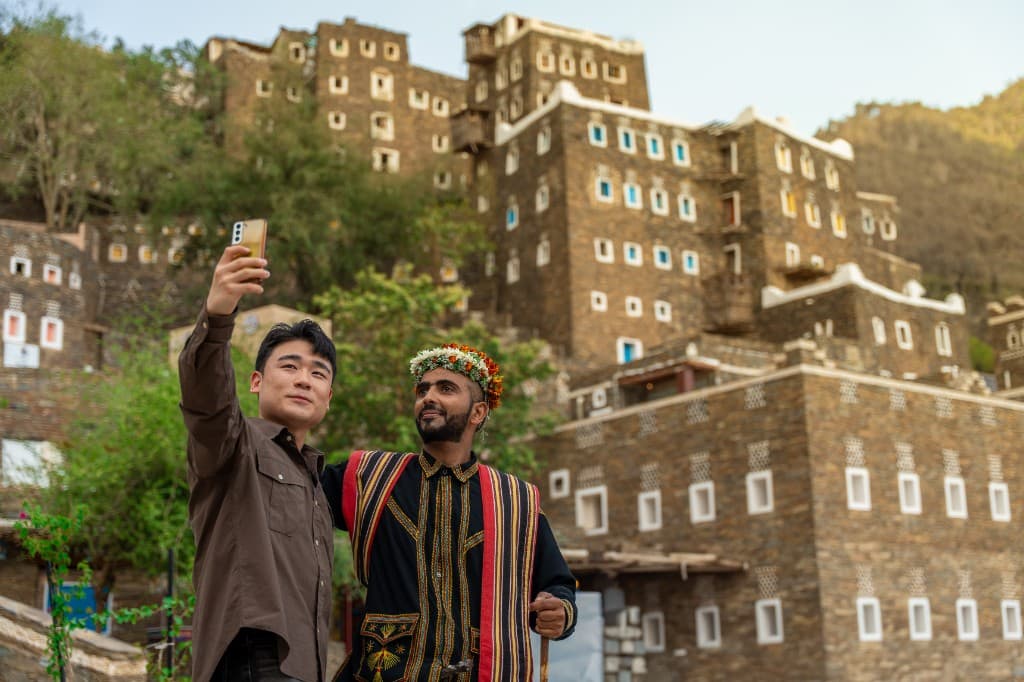
Rujal Alma is renowned for its 900-year-old heritage village, distinguished by consistent stone architecture and efficiently utilized spaces across sixty adjacent palaces. These are adorned with white crystal stone facades and brightly colored, patterned interior walls known as Al-Qatt Al-Asiri art. One of these palaces serves as an open heritage museum, welcoming visitors throughout the year with various archaeological and heritage displays that narrate the history of its people and place over the years. This storied architecture and unique civilization of the Rujal Alma village have earned it a spot on the UNESCO World Heritage List, enhancing its global fame and attracting more visitors from around the world.

Rujal Alma is enveloped by a notable density of vegetation and is famous for the ancient Talaq trees. Visitors can revel in its lush nature at various parks like Wadi Haswa Park, visit the Honey Hut to learn about honey production stages and types in a rural setting among mountains and valleys, or bathe in the mineral waters at the hot spring located at the base of a known volcanic mountain in Wadi Al-Magsal, returning home with memories colored in beauty and heritage.

Muhayil Aseer

Nestled among the Sarawat peaks, 80 km from the city of Abha, Muhayil Asir lies like a dreamy tune. At an elevation close to sea level, its moderate climate boasts mild winters and warm summers, making it a luxurious winter retreat for mountain dwellers. The region's natural diversity of green plains, flowing valleys, and moderate rainfall yields lush fields of top-quality vegetables, fruits, and Tehama grains like corn, which enter into various delicious local dishes, alongside the signature dish that draws many a traveler: "Muhayil Haneez.”

Visitors to Muhayil Asir find a peaceful refuge at Al Haila Park, stretching along the banks of Wadi Hali, one of the kingdom's largest valleys, or by venturing to Wadi Qana with its lush orchards and dense trees, or enjoying a complete view of the city from the summit of Jabal Al Muqaysera Park, which divides Muhayil into eastern and western sections. Adventurous spirits can soar in paragliding from the peak of this mountain or from the lookout of Jabal Hada.

For those keen on uncovering the city’s unique secrets, one can delve deeper into Muhayil Asir at its traditional market, wandering through vibrant bazaars brimming with local produce and the bounty of surrounding villages, trying on traditional attire, tasting local flavors, and chatting with its friendly inhabitants.

The locals share stories of Muhayil Asir’s ancient heritage, its castles and fortresses dating back centuries, rock inscriptions, and historical writings, particularly visible in Wadi Nakhalin. They extend an open invitation to visit the "Al Ghaleelah" well, one of many in Muhayil, to taste its flowing water that naturally supplies Muhayil Asir with fresh water.

Abha

Nestled among the Sarawat Mountains in southwestern Saudi Arabia, Abha stands like a jewel-crowned queen, cloaked in mist and beauty, surrounded by the of clouds that grace it throughout the seasons. Abha, the vibrant gateway to the Aseer region, is rich in diversity in every direction. It is known for its cool, rainy summers; qualities that have made it a premier and sustainable tourist destination for visitors from around the globe. Here, cultural, artistic, and historical treasures abound. You can explore ancient castles filled with stories, like Shamsan Fortress, Dhra'a Fortress, and the major and minor Al-Daqal Fortresses.

The city also has various archaeological museums that were once homes, transformed by their owners into lasting beacons of beauty that introduce the world to the deep-rooted heritage of Aseer and its assorted treasures, such as Fatimah Museum and Al-Raqadi Museum.

At its heart, along the banks of the lengthy Abha Valley, lies the famous Tuesday Market, a traditional experience of shopping and cultural immersion in this lofty city. Nearby, the artistic village of Al-Muftaha thrives as the heart of arts and music, where the stage of legendary singer Talal Maddah stands. Abha's lush fields, enriched by its climatic diversity, yield a variety of agricultural products from roses to grains and fruits to vegetables, supporting the local commerce, industry, and farming.

Abha, with its timeless charm and serene summer dreamlike tranquillity, competes globally in its development and urban sophistication, featuring governmental and civic facilities that provide quality services, enriching the region's investment and progress. In Abha, you’ll find renowned restaurants, modern cafes, the latest in entertainment and sports, and it remains a year-round hub for prestigious festivals, conferences, and seminars.

Abha: an endless treasure of wealth and wonder. Discover Abha's Famous Landmarks

Khamis Mushait

Tucked in within the mountain peaks to the west and the beginnings of golden sands to the east, Khamis Mushait spans across a vast plain in the heart of the Aseer region. It pulsates with life, linking the east and west, and serves as a dynamic artery of growth and investment. Historically a regional hub for commerce and industry that served both residents of Aseer and travelers, it continues to play a vital role and now stands as one of the four largest commercial cities in the Kingdom, contributing significantly to regional development and attracting capital and investments.

Khamis Mushait is teeming with various industries, including iron, dairy, aluminum, and paints, and thrives in free trade, especially in gold, jewelry, and automobiles. With its massive commercial and investment activities, temperate climate throughout the year, and diverse tourist attractions like historical sites, museums, shopping centers, and entertainment venues, it has become a destination for many visitors. This influx has fueled the development of modern accommodations and hospitality, from hotels to resorts.

For tourists, Khamis Mushait enriches their experience with its wealth of historical heritage visible in the ancient palaces of the Al-Mushait family, its cultural journey through museums and traditional villages like Ibn Hamsan Village, or its entertainment complexes such as Khamis Boulevard.

Khamis Mushait stands as a living testament to richness and authenticity.

Bisha

Nestled between the Sarawat Mountains and the Empty Quarter's golden sands, Bisha sits along its lush valley and numerous tributaries. This area boasts flowing springs, towering palm groves, rich heritage, and notable urban development. Historically a caravan route, notably the Elephant Path, Bisha has a long-standing settlement history, evidenced by archaeological remains, inscriptions, and old mines indicating a past industrial and commercial boom. The area of Al-Ablaa and Tubbalah village, rich with Thamudic inscriptions and unique architectural remnants, have been praised by pre-Islamic poets. Shalan Palace, from the first Saudi state era, remains a historic site.

Mount Sairah, known for its frosty white appearance and colorful stones, is a serene spot for locals and a magnet for adventurers. Wadi Turj, flowing from the Sarawat Mountains, paints a stunning scene of lush banks and moving waters, blending fiery sands with fertile plains. King Fahd Dam, among the world's largest concrete dams, boosts Bisha’s agricultural wealth, which is known for palms producing famous dates like Safri Bisha and Berni, alongside various fruits and vegetables.

Bisha’s markets, such as the ancient Nimran Market and other weekly markets, reflect the rich agricultural output and dynamic commercial life of the region

Balsamer

Atop the Sarawat mountain range north of Abha, Balasmar stands—a place chosen by the Banu Al-Asmar tribe for its fertile soil and lush greenery, with a climate cool in summer and rainy most of the year. Balasmar has become a favored destination for its pristine natural beauty and specialty crops like wheat and barley, known for their quality, alongside abundant production of ghee and honey.

The archaeological tales of Balasmar unfold in the expansive Wadi 'Aya, home to some of the oldest civilizations in the Arabian Peninsula. Unique construction remnants begin with fortresses and war castles guarding the ancient walls, houses, and marketplaces whose traces continue to awe visitors. Distinctive to Balasmar are the "Rusoos"—multi-tiered stone tombs unique in the world, stacking up to four levels, each containing the remains of an individual.

Balasmar's vast landscapes are dotted with towering mountains, verdant valleys, and dense forests, making it a haven for those keen on mountain climbing and forest exploration. Attractions like Shu'af Al Khuraim Lookout, Khalaqah Park, and Wadi Khaddar Park provide natural retreats for residents and tourists alike, making Balasmar a distinctive choice among the tranquil areas north of Abha.

Bilhamer

Nestled in the heart of Aseer's mountainous peaks, north of Abha, Balhamar is enveloped in mist and shines beneath the rain. Its fertile fields burst with succulent fruits like figs, grapes, and pomegranates, alongside abundant crops of grains, vegetables, and fragrant plants, producing exquisite honey and ghee. Balhamar proudly overlooks the warm lowlands, a cozy refuge in winter, with its green slopes offering a picturesque setting and a delightful experience for tourists.

Known for its rich produce, Balhamar boasts vibrant markets held on various weekdays, named after the days they occur, such as Saturday Market, Thursday Market, and Haymah Market. These bustling markets are a treat for those interested in observing the lively trade of livestock, agricultural produce, and artisanal goods.

Balhamar's heritage is evident in ancient remains like walls and buildings made from local materials and collective tombs known as "Rusoos" in Wadi 'Aya, which stretches between Balhamar and Balasmar. Visitors can delve deeper into cultural details at the tourist village of Bin Adwan, combining exploration and leisure, or visit Balhamar’s extensive natural parks in every direction like Al Azah Park, Al Kamil Viewpoint and Park, and Bayhan Shu'af Park, where streams meander through valleys up to a lushly covered mountain dotted with camping sites.

Balqarn

Balqarn, the northern gateway to Aseer, is divided into three distinct natural environments. The first is perched on the rugged rocky formations of the Sarawat Mountains, featuring flowing valleys and fertile agricultural terraces. The second, the Asdar area, boasts scattered dwellings and lush pastures. The third, the Tihama locations, with its warm climates in the low plains, serves as a winter haven for mountain dwellers.

This climatic and environmental diversity endows Balqarn with a varied agricultural output visible in its produce like berries, grapes, and olives, making it a tourist destination for those seeking unique environmental contrasts and eager to explore its natural sites, dense forests, green plains, and tranquil streams as seen in Shibana Park, Al-Khaldiyah Park, and Al-Azilah Park.

Balqarn’s rich agricultural bounty supports a vibrant array of bustling markets, attracting shoppers and visitors keen on experiencing and tasting fresh local products.

The historical depth of Balqarn is evident in its ancient forts and castles scattered across its villages, showcasing the resilience and fortitude of its people. Additionally, numerous artifacts and inscriptions indicate ancient settlement, like those on smooth rocks in Shibana Park. Al-Sidra Mosque, an ancient architectural marvel with stone structures and wooden column-supported roofs, and the heritage village of Sabt Al-Alaya, where buildings have stood for centuries, are testaments to its rich past.

The various annual festivals in Balqarn, such as the Grape Festival, Olive Festival, and shopping festivals, enrich visitors' experiences and are well-attended by locals, making them worthy of a visit during their seasons.

Bareq

Bareq, a distinguished district in Aseer, sits between its mountains and the Red Sea's shores, unfolding with numerous villages across its green plains, abundant valleys, and high mountains, under a moderately arid climate. It's a haven for safari and camping enthusiasts and mountaineers, who find their bliss hiking in Mount Thurban, famous for its natural honey sources from verdant trees, and Mount Athrab, or along its valleys like Wadi Bardani with its flowing waters and stunning green banks.

The ancient stone-built villages of Bareq, layered in history, signify an age-old civilization dating back to pre-Islamic times. They house one of the Arab world's oldest markets, Hubasha Market, where Prophet Muhammad traded before his prophecy. Although many of its original features have faded, some rock inscriptions remain, alongside artifacts and inscriptions in Makhmaj and Al Hudn villages. The area also holds remnants of the historic military road linking Mecca and Yemen, the Sultans' Road, and other paths that served as caravan crossings through history.

Today, Bareq continues its commercial vibrancy with numerous traditional and seasonal markets like the Wednesday Market and the Tuesday Market in Thuluth Al Manzar. Visitors to Bareq can immerse themselves in the heritage villages and ancient mosques, or spend soulful nights camping along the banks of its serene valleys.

Al Soudah

At the highest mountain peak in the Arabian Peninsula, rising over 3,000 meters, Al-Soudah reigns supreme in Aseer as a unique tourist experience. It boasts dense vegetation, diverse ecosystems, a moderate summer climate, and cold winters, enriched by its cultural, artistic, historical, and civilizational heritage.

In Al-Soudah, tourists revel in adventure by engaging in mountain sports like climbing, paragliding, or hiking through its lush, rain-soaked forests in natural parks like King Abdulaziz Park or the famous Raydah Nature Reserve, known for its ancient coffee trees. Visitors can also step back in time to explore the history and civilizations documented by nearly two hundred forts, castles, relics, inscriptions, and palaces like those of Al Abu Sarh and Al Abu Naqta families.

Al-Soudah is a haven for rural experience enthusiasts, offering accommodations and camping in various villages like Baah Rabeeah, Al Qusayr, and Al Azizah, and discovering its waterfalls like Ain Al Dhaiba and Al Muhatib.

Al-Soudah is a promising opportunity for tourism investment, utilizing its natural, environmental, and sustainable cultural resources. It is undergoing significant developmental efforts to create a world-class tourist experience, positioning it as a global destination throughout the year.

Al Namas

Located 140 kilometers north of Abha, the enchanting city of Al-Namas sits atop the Sarawat Mountains. Its beauty is not merely in its perpetual cloak of mist, making it seem as though it has become one with the fog of both summer and winter, nor solely in its stunning natural offerings of ancient green forests, or fertile, water-rich flowering fields—as seen in Murir Park or Shu'af Al Walid Park. Its allure also stems from the mysterious charm of its deep historical roots, drawing in those who wander through and evoking civilizations long past.

Al-Namas is dotted with fortresses, castles, and palaces featuring unique architecture—cylindrical or square—that unleash a tale of curiosity, like the Mashrefah Palace, Al-Muqar Village, and Mishnah Fortress. Its historical mosques, like Al-Saraw Mosque and Thuraban Mosque, stand as testaments to its rich Islamic heritage from the religion’s earliest decades.

The mountains of Al-Namas, draped in majesty and allure, offer more than just breathtaking nature; the archaeological sites on these mountains or the engraved tombs provide another layer of excitement and discovery, like Jabal Dhie Ain and Jabal Al-Sajin, which hint at ancient iron mines. The ultimate thrill lies in uncovering one of the Arabian Peninsula’s oldest forgotten civilizations in Al-Jahwah Village, which preserves parts of its ancient buildings, relics, and old walls.

Al-Namas is a grand opportunity to satisfy the yearning for discovering history intertwined with stunning nature.

Al Majardah

Northwest of Abha, Al majaridah welcomes those seeking the serenity of nature and the charm of eco-tourism amid its ancient villages and mountains. Strategically positioned between various provinces and cities, from the coast to the peaks, its diverse terrain bestows a climate that's warm in summer and mild in winter. This climate nurtures an abundance of fresh produce, from banana and coffee trees to citrus, mangoes, and sidr trees—sources of delectable honey—along with an assortment of aromatic plants like basil, mint, and barak. These products abound in Majardah's bustling markets, offering visitors a rich experience to buy local produce or traditional pottery and immerse themselves in the culture of vibrant marketplaces, once social hubs for solving community issues, sharing news, and meeting friends.

In Majardah, explore the deep historical ties to heritage and ancient relics through its traditional architectural styles, as seen in Al-Fuqaha Village in Abs Center to the northeast. Known for its name indicative of widespread knowledge among its residents, the village boasts historical inscriptions on its ancient rocky structures. Raha Al-Sumaid Village atop Mount Khat offers a distinctive architectural style built from local stone and clay, its slopes marked by cascading waterfalls during rainy seasons. Alternatively, visit the historic Al-Khatwa Village with its towering buildings, once a governmental center in Majardah.

Mountain climbing enthusiasts can ascend Mount Reeman in Majardah to revel in stunning natural vistas, or hike through the forests of Mount Tehwa, engaging fully with the lush landscape.

Al Haridah

Al Haridah, a prime seaside destination 120 km from Abha, bustles with visitors fleeing to its beauty from the harsh winter of the peaks. Al Haridah offers a variety of choices: spend time at the seaside front of Aseer Marine Park, which includes green spaces, a yacht and boating club, water sports, and children's playgrounds, or dive into the unspoiled waters of Al Mu'jaz Beach, or enjoy fishing in Al Haridah Creek, known as "Ali's Stab," and visit the nearby shrimp farming project and stroll along the banks of "Um Lusb" valley crossing it. Alternatively, tourists can choose the third maritime face at "Al Raqba" Beach with its white sands and the majestic ebb and flow of the tide on moonlit nights. Exploring the pristine islands off Al Haridah is a coveted adventure, with visits to "Kdembal," "Samar," and "Marka" islands, or soaring over them in a glider. Meanwhile, fishing enthusiasts find their passion aboard one of the fishing boats from Al Haridah Marina, heading out to sea laden with the sea’s bounty.

Al Haridah is a marine destination unmatched in its purity.

Al Birk

On a high volcanic ridge in Aseer, the tranquil town of Al Birk overlooks the Red Sea’s white, sandy beaches. These natural bays along the coast have turned it into a bustling maritime destination teeming with visitors. Adventurers explore the clarity of Al Birk’s shores, diving among coral reefs and mangrove forests, or joining local fishermen on their boats—a vital part of their livelihood.

Al Birk also captivates those fascinated by history and archaeology with its ancient Al Birk wall, a stone fortress extending to the sea, built millennia ago to safeguard the city on a vital trade and pilgrimage route. In its center stands a formidable fort, once a watchpoint over the city. Nearby, the early Islamic Abu Bakr Al-Siddiq Mosque sits next to the historic "Majdour" well, a crucial fresh water source near the beach.

Mount "Al Ash" in Al Birk is home to numerous ancient inscriptions and writings, some naming historical figures and deities. To the east, amidst volcanic fields, lie circular stone structures likely used as ancient burial sites.

Large valleys like Wadi Dhaban and Wadi Armarm cut through Al Birk’s mountains, with lush greenery on their banks where locals graze their livestock and enjoy nature walks.

Al Birk: a vivid blend of sea and history.

Ahad Rafidah

Ahad Rafidah, one of Aseer’s prominent provinces, lies southeast of Abha. Named after the renowned Sunday market, a hub for trade, poetry, and reconciliation, it features a moderate climate with plentiful rain, contributing to its vibrant agriculture amid its mountains and plains.

Deep within a rocky fissure of its mountains lies the ancient village of "Al-Habala," once accessible only by ropes. The residents have since relocated, transforming Al-Habala into a tourist site with residential villas, cable cars, and striking rock formations, drawing crowds annually. Nearby, the majestic mountains of Al-Sha'ara and Al-Mahall offer exhilarating hiking experiences and stunning views of cascading waterfalls during the rainy seasons.

"Al-Marba" Park stretches south of Ahad Rafidah as a verdant carpet with dense trees and scattered rock formations, a haven for nature lovers. "Sha'af Gharma" Park offers a mesmerizing view over the Tihama plains through occasional mists.

Ahad Rafidah is also home to one of the kingdom’s first open archaeological sites at the Jurash site, which showcases building remnants and artifacts that predate Islam, ongoing excavations revealing its rich history. Additionally, ancient inscriptions and drawings are found here.

Locals, deeply invested in beauty, art, and heritage, have converted some old mud houses into museums like the Clay House Museum and the Al-Amiriya Museum, offering insights into a richly detailed life, both past and present.

Cultural tourism thrives here too, with the Culture House serving as the first public library in the region, supported by the Ministry of Culture in its new form.